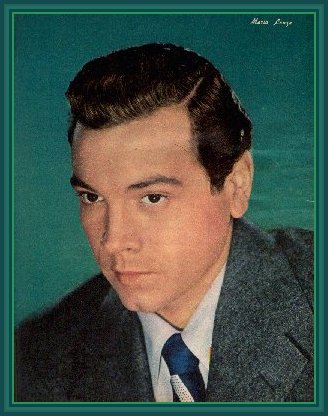
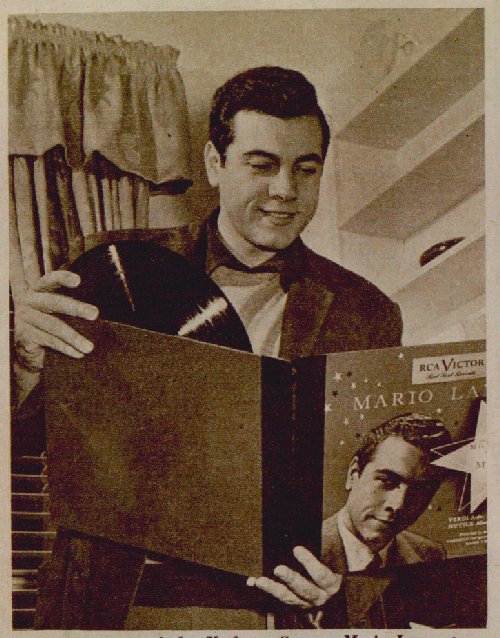
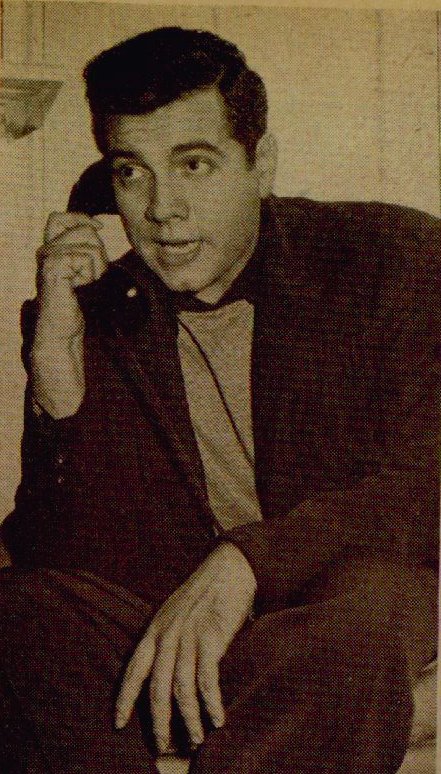
Mario had just returned from a four weeks personal appearance tour. He spent a week in his home town, Philadelphia. This was his first taste of his new fame. But let Mario take it from there.
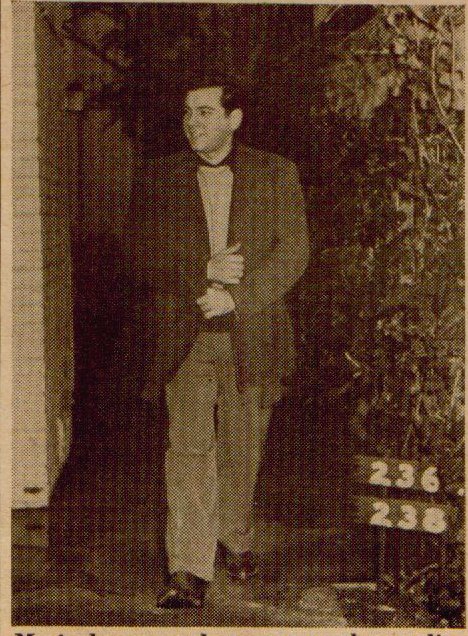
"Imagine it," he began, "in the Philadelphia parade I waved to a million and a half people! We had the lead car, my parents and me. Doesn't that sound important ?"
He laughed. "Of course, it happened there was an American Legion Convention going on in the city, and the President was in town, too . . . not in the parade, I must tell you.
"The parade started from our old neighborhood in South Philadelphia. My parents knew almost everyone in that Italian and Jewish colony, and while we waited to get underway, 546 people asked me for autographs. I was too busy signing to count them, but our publicity man - the one who kept track of how many times I sang - told me. How that man loves statistics! He should have been there the day I was born, because that day the neighbors drank up 2 1/2 barrels of wine, and maybe he would know how many glasses that will make?" Mario's left eyebrow shot up, as it always does when he is amused or excited.
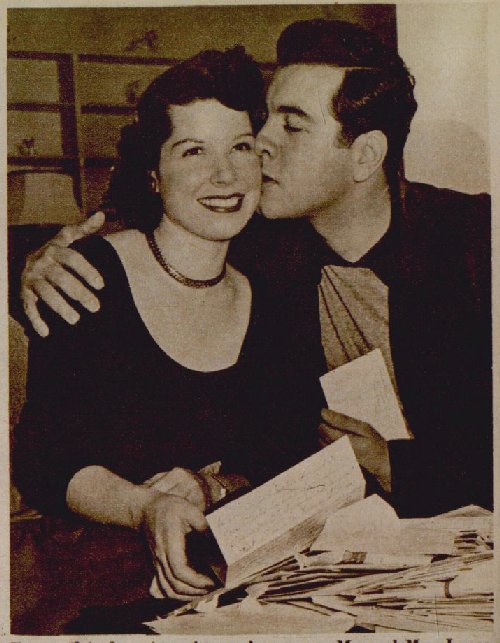
"I was Alfred Arnold Cocozza then. Alfred - isn't that a heck of a name for me? When I began to sing, I changed to my mother's name; only instead of Maria, I made it Mario. As we rode along, my mother would say: "Wave to the people in the window up there, Freddie!" or "Don't forget the people over here, Freddie!' and I wished I had six hands.
"While we were in our old neighborhood, people called to my father and mother: "Hello, Tony! Hello, Maria!" but pretty soon we moved to the central section of town, then to the northern and northwestern sections, and people still waved to me wherever we went.
"I was new, nobody knew me, but that great studio, M-G-M, see what they did for me? On my car is a great red sign: Philadelphia's Home Town Boy, Mario Lanza! So how could they miss me?"
During the week in the Quaker City, Mario's parents were introduced at each performance by Johnny Johnston, master of ceremonies of the show that preceded the picture. At first, reported Mario, his father came out reluctantly.
"He would drop his jaw down and look out under his brows at the people, as if he were playing a heavy," said Mario, illustrating with a swoop of the head and an ominous glare. "But pretty soon he would come out smiling, waving to everyone up to the top balcony, until my mother whispered: 'Look at the man! Now we can't get him off!"
That first night, Mario didn't get to bed till dawn. At 5:12, he fell across his bed and dropped off to sleep, and at 5:30 he was blown from his bed by a bomb!
"I thought it was the atom bomb," he laughed. "The legionnaires had put a fire-cracker in the bathroom ventilator; I had my bathroom door open on account of the heat, and when it went off I was blown across the room. To find out we were still in this world, that was a thrill!"
After the Philadelphia triumph, Mario headed for New York.
"You know how people will say: 'So he's a hit in his home town. What did you expect?'" Mario shrugged, and thrust out his underlip. "But in New York, I got nine notices, eight of them favorable. Favorable - my heart, they were marvelous! I was grateful even to the one that wasn't so good." He kissed the tips of his fingers to that writer.
"Let me tell you: Kathryn Grayson, Johnnie Johnston and I were to appear at the Capitol, with our picture. They told me I was to sing an aria from an opera. 'But audiences at that theater won't like that,' I objected. 'They want jive or popular music. For the opera, they will go to Carnegie Hall. I know I would.' I thought of myself standing up there singing for three minutes that were going to feel like twenty-five to my bored listeners.
"They said: 'Are you crazy?' and I thought: 'No, you are,' but I did not tell them that...How wrong I was! I walked down the street, shaking, and saw my name on the marquee: Mario Lanza, In Person Today! I shook more. Then I stood in the wings, trembling, while Johnnie, out front, was introducing me.
"I ran around the curtain," Mario recalled, "and found myself on about twelve inches of stage. I was so excited it's a wonder I didn't fall on my face in the orchestra pit. They clapped and suddenly I wasn't scared any more.
'There are some longhairs out there,' I thought. 'They won't mind if I sing opera.' I sang, and they wouldn't let me go. I even had to make a speech. I said, and I meant every word of it: 'I wish that every person in this theater today could have the thrill that is mine tonight, could feel what I am feeling, standing here!'"
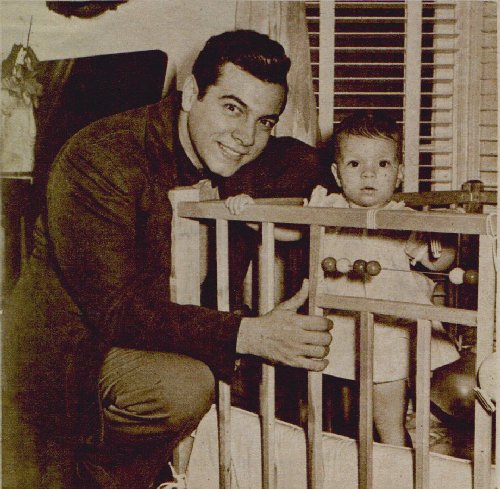
The greatest wish of Mario's heart is to play the life of Caruso, a dream which may soon come true. According to Jesse Lasky, who made Caruso's only film, the young star's voice is much like that of the famous tenor whom he greatly admires.
When he was a little boy, Mario's mother says he would pass up movies or ice-cream to sit and listen to Caruso's records. "I learned how to sing from him - he was better than movies," explains Mario enthusiastically.
As he grew older, each extra coin in the kitchen bank was saved for Mario's ticket to the Philadelphia Symphony.
Years later, Koussevitzky famous symphony conductor, was appearing at the Academy of Music in Philadelphia. At rehearsal, he stepped from his dressing room to see who owned a fine voice he heard. It was Mario who had just moved a piano into the hall - his first job, which came at once to an abrupt end.
Koussevitzky took him to the Berkshires for the summer, where the boy worked hard in his discoverer's Berkshire School and Music Festival. In the summer of 1942, he made his debut with celebrities from the Metropolitan and Irma Gonsales, South America's greatest star of the operatic stage.
When he returned to Philadelphia, however, "Greetings from Uncle Sam" awaited him, and he spent three years in the army. For a year he played in "Winged Victory" and met such Hollywood luminaries as Edmond O'Brien, Lon McCallister, Peter Lind Hayes, Barry Nelson, Don Taylor and Bert Hicks. The cast came to Hollywood to make the picture, and lived in a tent city in Santa Monica. One night, Bert Hicks told him that his wife, baby and sister lived not five minutes walk from the studio where they were working.
"Let's you and I go home for dinner, instead of trekking all the way to Santa Monica in the bus." Bert suggested. "I've called them - they say come. They've got too much food tonight, anyway!"
"Up to then, I was the guy who was never going to be married," confessed Mario. "Bert's sister, Betty, opened the door to us, and in five minutes I knew I couldn't live without her. In three months, we were married, and we've been married nearly five years. Am I lucky!"
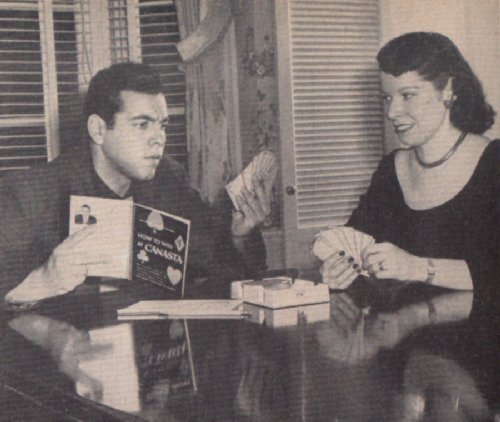
That summer, after his army discharge, Mario took Jan Peerce's place on the Celanese Hour, and signed a contract with Victor Records. Then Destiny stepped in.
"Let Sam tell you." Mario gestured toward quiet gentleman in dark glasses who had heretofore sat listening.
Sam Wiler, successful New York business man, was studying voice from the teacher who coached Mario that summer. No professional, Sam sang for the love of singing. His passion was the tenor voice, and one day, when Mario arrived early for his lesson, their teacher asked him to sing something for Sam.
"The minute I heard him I knew I must see that this voice reached the world. I knew, too, that it wasn't yet ready; it might be ruined if carelessly used. Need for money might mean that it would be worn out too soon. So I became his manager," said Mr. Wiler, as if that was very simple. ''I took him to Enrico Rosati, Gigli's one and only teacher; and Rosati, hearing him sing, accepted him."
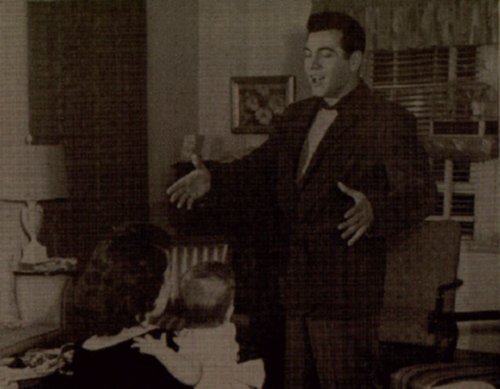
During the training period, Mr. Wiler put Mario and Betty on an allowance of $100 a week. When Rosati pronounced his student ready, a number of concerts were arranged in small towns to give Mario a sense of security before an audience, and then, in 1947, he came to sing in Hollywood Bowl. After his aria from "Andre Chenier," applause lasted for twelve minutes. Ida R. Koverman of M-G-M Studios came backstage after the concert to arrange that the young singer meet Louis B. Mayer next day. . . . As you've guessed, Mario signed a long term contract with the studio.
Followed more study, more concerts, chances to sing with both Philadelphia and Boston Symphony Orchestras, and an operatic debut in "Madame Butterfly" with the New Orleans Opera Association. And then the role in "Midnight Kiss."
The young star's contract calls for six months making pictures, six months of concerts or opera. But after "Midnight Kiss" broke existing records, Mr. Mayer suggested a change. "Why break it up now? Let's follow at once with another picture. We can make three pictures in a year, if we work hard; then you can have a year off to sing at Italy's La Scala Opera House!" And that is his plan.
In a year, Mario estimates, he can sing in many famous opera houses here and abroad. Then he can return to pictures for a year, and then - at long last - the Metropolitan Opera!
Before he plays Caruso, Mario will do "Serenade to Suzette" with Kathryn Grayson, followed by "Deburau" with Ezio Pinza, the opera star.
"Ezio and I play father and son, both in love with the same girl," he confided. "In Sacha Guitry's original story, they were clowns. But why would clowns be singing? So now we are opera singers. And let me tell you -" He leaned toward me, confidentially, dark eyes dancing. "I win the girl at the end of the picture!"
We're quite confident that Mario Lanza will win hosts of new fans, too - and a permanent place on the roster of Hollywood's brightest stars.